Tobacco Grading Criteria Chart: Color, Size, Texture, Oil and Defects
🔑 Key Takeaways
- 🎨 5 grading criteria: Color, texture, size, oil content, and defects - all must be evaluated systematically
- 👤 3-5 years to train human experts vs 2-4 weeks for AI systems with 500-1000 sample leaves
- 📊 AI-assisted grading helps factories apply the same visual criteria across batches after calibration with representative sample leaves
- 🌿 Wrapper leaves require highest quality - flawless appearance, uniform color, excellent elasticity
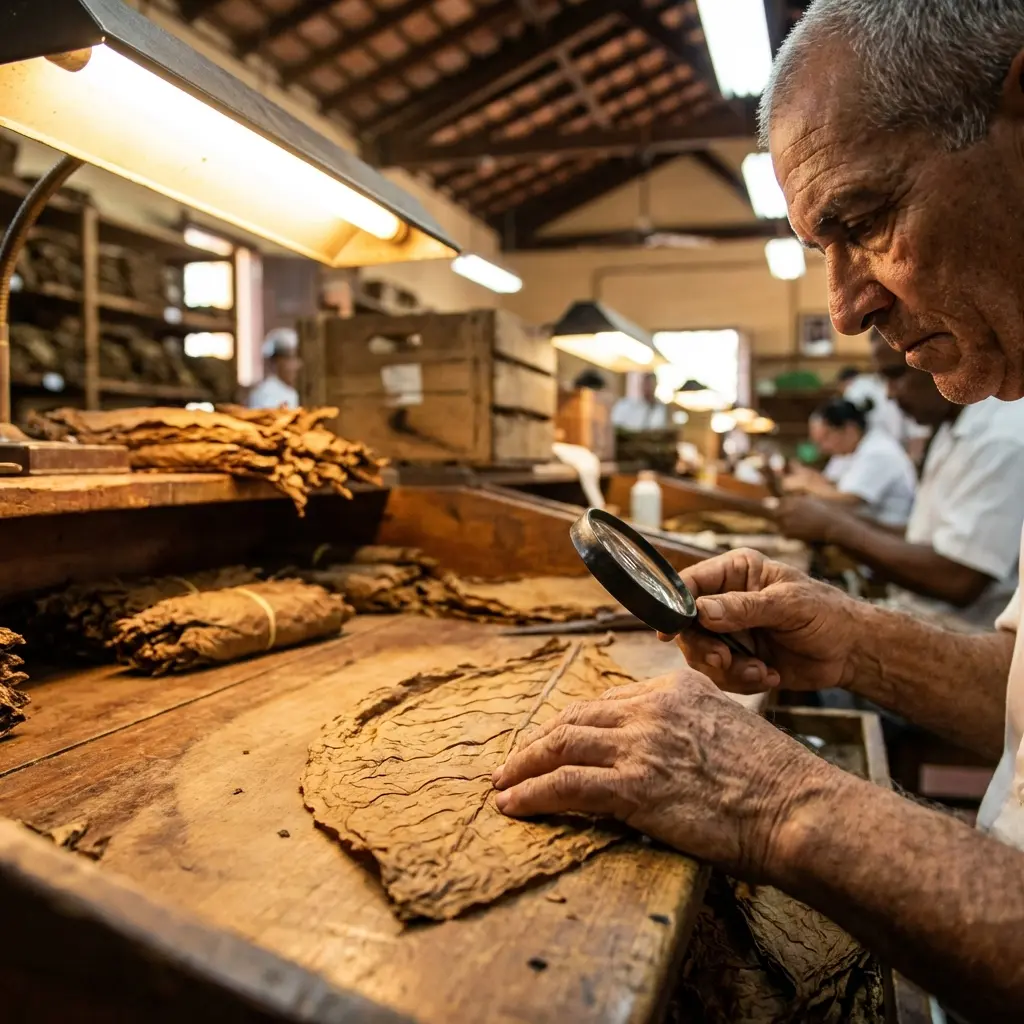
In Part 1 of this series, we explored the fundamentals of tobacco grading and the three essential components of a cigar. Now, we dive deeper into the technical aspects: how do expert graders actually evaluate tobacco leaf quality?
This article reveals the specific criteria, techniques, and standards that professional tobacco graders use to classify leaves with remarkable precision-and why these standards matter for premium cigar production.
Short answer: Tobacco grading evaluates leaf color, size, texture, elasticity, oil content, moisture condition, vein structure, and visible defects. For cigar production, wrapper leaves need the most uniform appearance, while binder and filler leaves can tolerate different visual standards. AI tobacco grading systems standardize these criteria with machine vision so every batch is judged by the same rule set.
Upgrade From Manual Inspection to AI Tobacco Grading
Eliminate manual fatigue and leaf breakage. CigarroSmart's AI vision grader sorts up to 4,500 whole leaves/hour with >99% classification accuracy across wrapper, binder, and filler grades.
| Grading criterion | What inspectors check | AI grading signal |
|---|---|---|
| Color | Uniform shade, maturity, curing consistency | Color histogram and shade classification |
| Size and shape | Length, width, usable area, symmetry | Image segmentation and dimensional measurement |
| Texture | Surface smoothness, veins, thickness cues | Texture features and surface pattern detection |
| Defects | Tears, spots, holes, mold marks, broken edges | Defect detection and severity scoring |
| Grade decision | Wrapper, binder, filler, reject, or rework | Rule-based or model-assisted classification |
📚 The Complete Tobacco Grading Series
- Part 1: Understanding Tobacco Grading - The Foundation
- Part 2: Tobacco Grading Criteria - Expert Evaluation (You are here)
- Part 3: AI-Powered Tobacco Grading - The Future is Here
The Key Evaluation Criteria for Tobacco Grading
Professional tobacco grading relies on a multi-dimensional assessment system that evaluates leaves across visual, tactile, chemical, and sensory parameters. Let's explore each category in detail.
1. Visual Criteria: What Graders See
Color Assessment
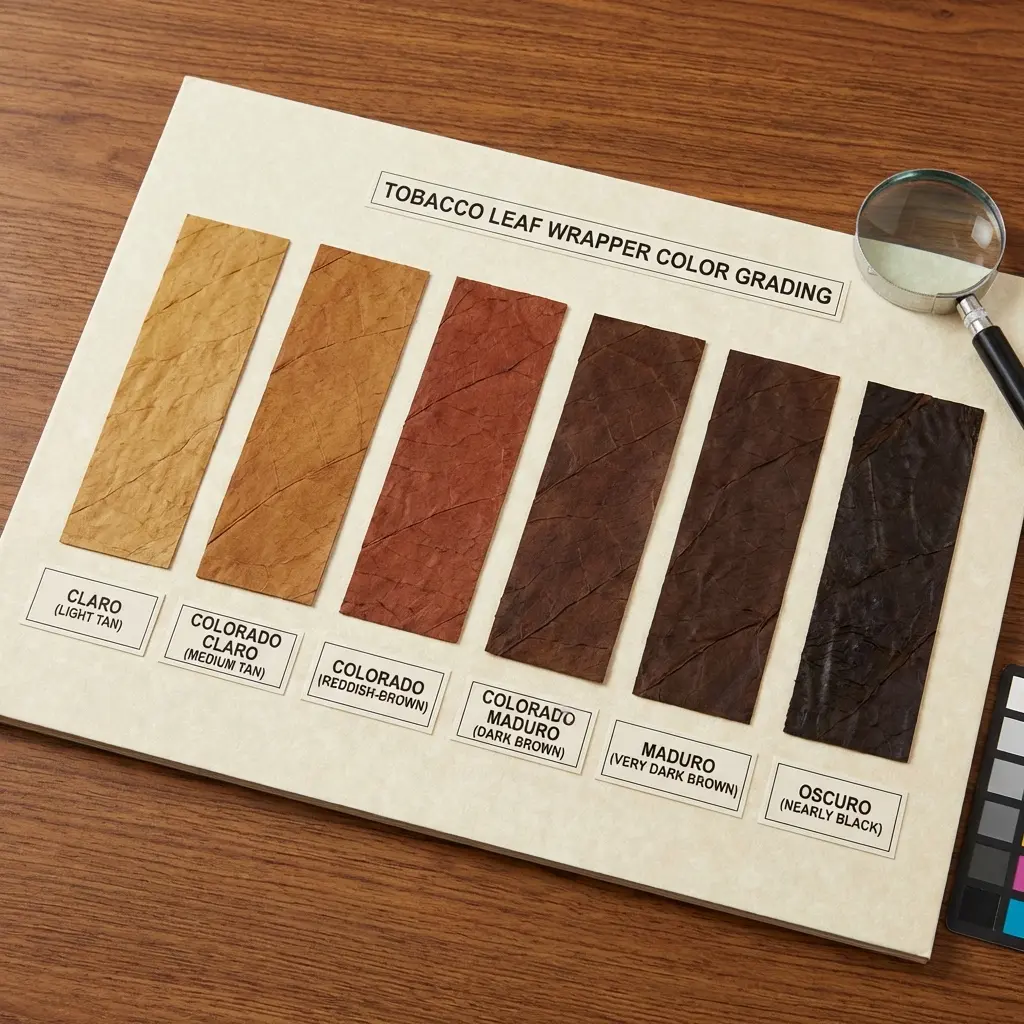
Color is often the first and most obvious quality indicator. Expert graders assess:
- Color Classification:
- Claro: Light tan, pale golden
- Colorado Claro: Medium tan
- Colorado: Reddish-brown
- Colorado Maduro: Dark brown
- Maduro: Very dark brown
- Oscuro: Nearly black
- Color Uniformity: Consistent shade throughout the leaf indicates proper curing and fermentation
- Avoid: Green patches (under-ripe), yellow spots (over-fermentation), or mottled appearance
Expert Insight: Color uniformity is more important than the specific shade. A perfectly uniform Colorado leaf is superior to an inconsistent Maduro.
Surface Texture and Defect Identification
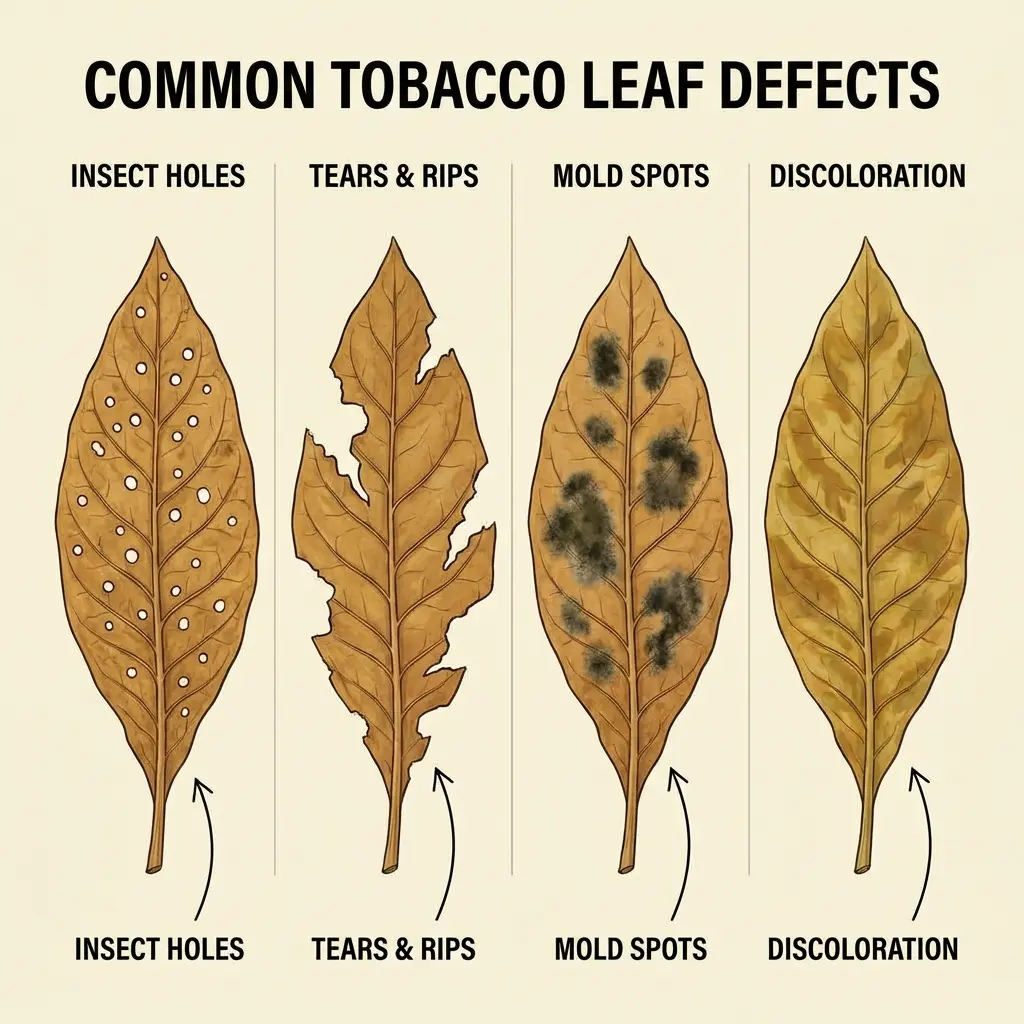
Graders meticulously inspect for:
- Smoothness: Fine-grained surface preferred for wrappers
- Vein Visibility: Minimal visible veins indicate premium quality
- Oil Sheen: Subtle glossy appearance signals optimal oil content
- Defects to Identify:
- Insect holes (automatic downgrade for wrappers)
- Tears and rips (acceptable for binders, not wrappers)
- Mold spots (reject entirely)
- Discoloration patches (indicates quality issues)
2. Tactile Criteria: What Graders Feel
Elasticity and Flexibility
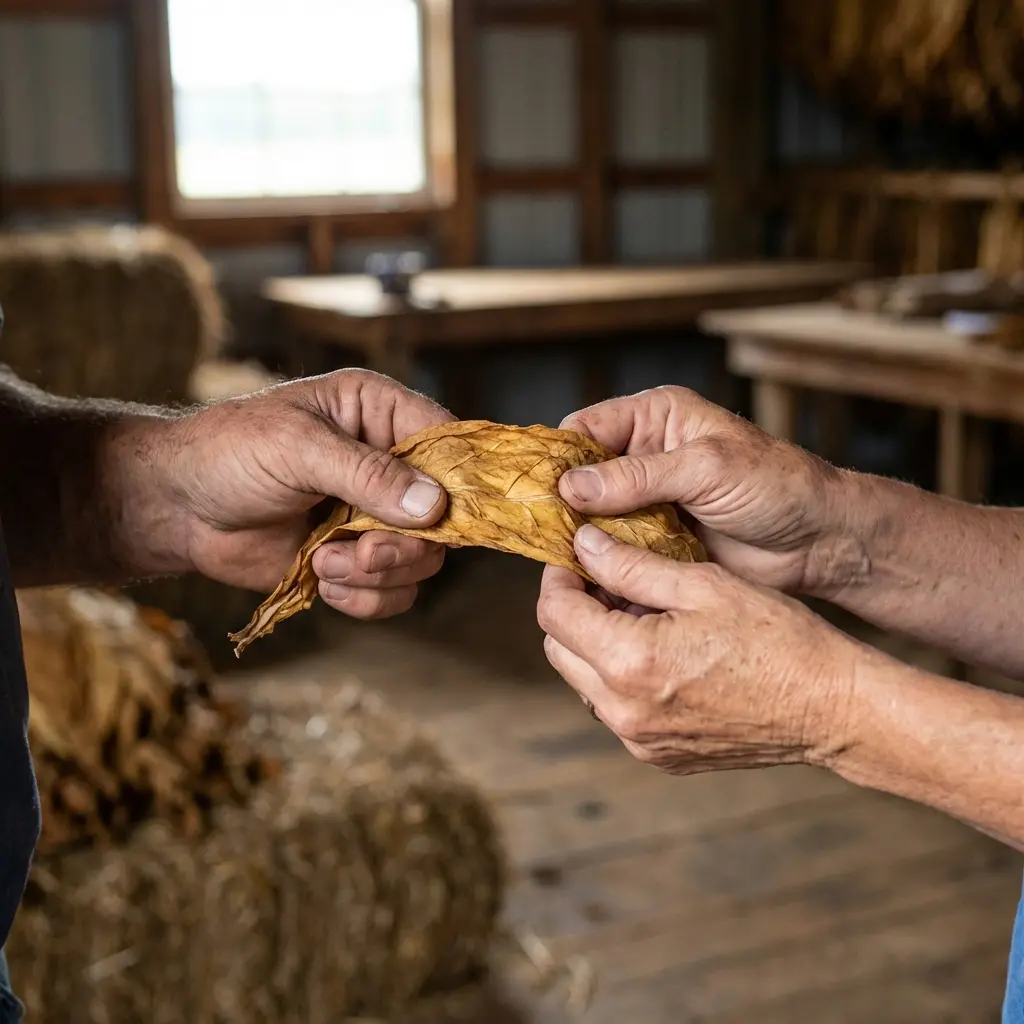
The bend test is a critical tactile assessment:
- Premium Quality: Leaf bends smoothly without cracking or breaking
- Wrapper Requirements: Must be extremely flexible to wrap tightly without tearing
- Testing Method: Gently bend the leaf; it should flex like leather, not snap like paper
- Brittle Leaves: Indicate over-drying or poor storage—downgraded or rejected
Thickness Assessment
- Wrapper Grade: Very thin, delicate (0.1-0.15mm)
- Binder Grade: Medium thickness (0.15-0.25mm)
- Filler Grade: Varies widely depending on plant position
- Measurement: Experienced graders can assess thickness by touch alone
3. Chemical and Sensory Criteria
Oil Content
Oil content directly correlates with flavor richness and burn quality:
- Visual Detection: Glossy sheen under proper lighting
- Tactile Detection: Slight oily feel when rubbed between fingers
- Optimal Range: Enough for flavor, not so much that it impedes combustion
- Impact: Higher oil = richer flavor, smoother burn
Moisture Content
- Ideal Range: 12-15% moisture content
- Too Dry (<10%): Burns too fast, harsh taste, brittle texture
- Too Wet (>18%): Risk of mold, uneven burn, difficult to work with
- Testing: Experienced graders assess by touch and flexibility
Aroma Evaluation
Premium tobacco has distinctive aromatic characteristics:
- Desirable Aromas:
- Earthy, loamy scent
- Subtle sweetness
- Rich, deep notes
- Hints of cocoa, coffee, or nuts (depending on variety)
- Warning Signs:
- Musty or moldy smell (reject)
- Chemical odors (contamination)
- Ammonia smell (over-fermentation)
- Sour notes (spoilage)
International Grading Systems
USDA Tobacco Grading Standards
The United States Department of Agriculture (USDA) maintains comprehensive tobacco classification standards:
- Class: Broad category (e.g., cigar leaf tobacco)
- Type: Specific variety and growing method
- Grade: Quality level within type
- Grade A: Wrapper quality—flawless appearance
- Grade B: Binder quality—minor imperfections acceptable
- Grade C and below: Filler quality—functional but not premium
Regional Grading Variations
Different tobacco-growing regions have developed their own grading nuances:
- Cuban Standards: Emphasis on wrapper perfection, strict color uniformity
- Dominican Republic: Balanced approach, focus on versatility
- Nicaragua: Strength and body prioritized alongside appearance
- Connecticut: Premium wrapper standards, shade-grown excellence
The Manual Grading Process
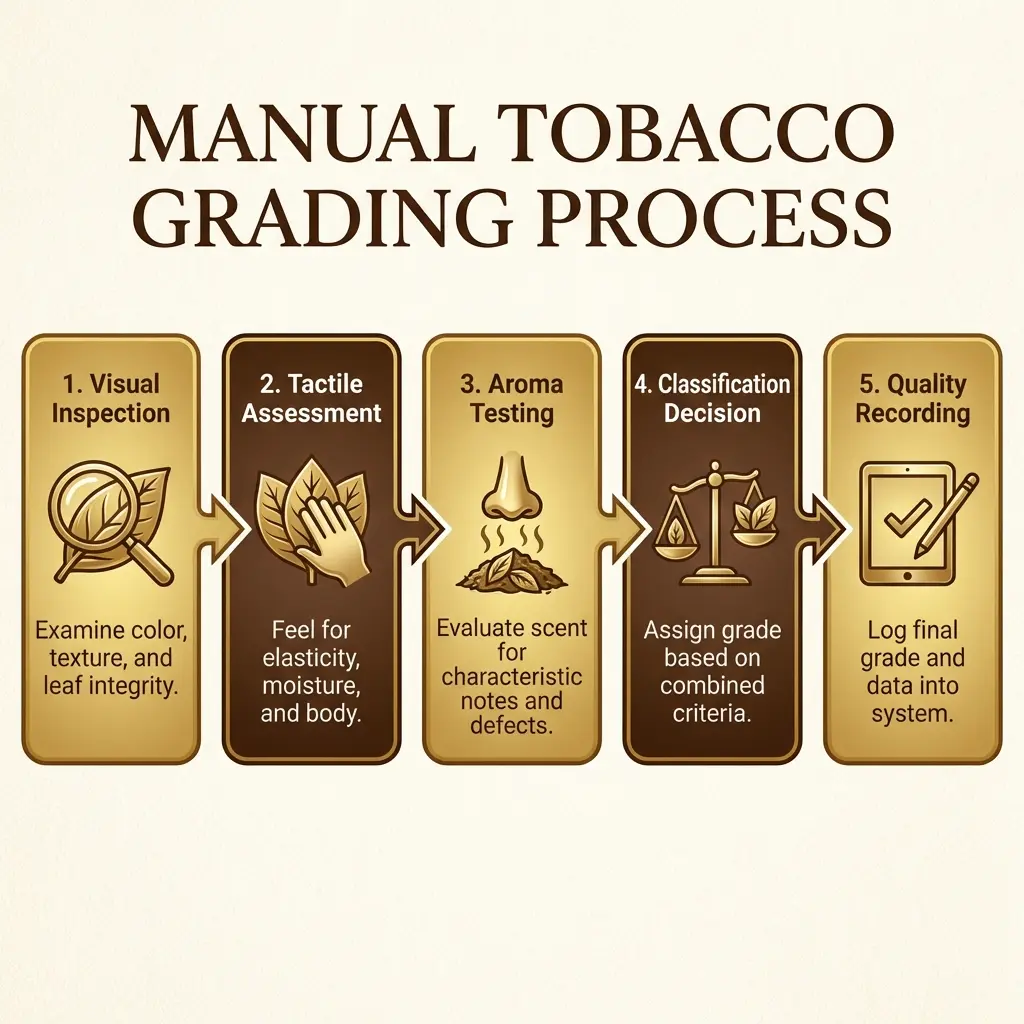
Step-by-Step Grading Workflow
- Visual Inspection:
- Examine color, texture, and leaf integrity
- Identify obvious defects
- Initial classification (wrapper/binder/filler potential)
- Tactile Assessment:
- Test elasticity with bend test
- Assess moisture level by feel
- Evaluate thickness and body
- Aroma Testing:
- Smell for quality indicators
- Detect any off-odors or defects
- Classification Decision:
- Assign final grade based on combined criteria
- Sort into appropriate category
- Quality Recording:
- Log grade and batch information
- Track for quality control and traceability
Grader Training Requirements
Becoming a proficient tobacco grader requires:
- Training Duration: 3-6 months of intensive instruction
- Cost: $12,000-18,000 per grader
- Skills Developed:
- Visual acuity for color and defect detection
- Tactile sensitivity for texture and moisture
- Olfactory discrimination for aroma assessment
- Decision-making consistency
- Ongoing Calibration: Regular testing against standard samples
Limitations of Manual Grading
Despite the expertise of trained graders, manual grading faces inherent challenges:
Consistency Issues
- Inter-Grader Variation: 15-20% quality variation between different graders
- Fatigue Effects: Accuracy drops 25% after 4 hours of continuous grading
- Subjective Judgment: Personal interpretation of borderline cases
Speed Limitations
- Processing Rate: 15-20 kg per hour per grader
- Bottlenecks: Manual grading often limits overall production capacity
Cost Factors
- Labor Costs: $450,000-600,000 annually for medium-sized operations
- High Turnover: 35% annual turnover requires constant retraining
- Quality Disputes: 8-12% of shipments require rework or price adjustments
Industry Reality: These limitations have driven the tobacco industry toward automated grading solutions that achieve 99%+ consistency while processing 3-4x faster than manual methods.
Quality Control Best Practices
Leading tobacco processors implement rigorous quality control measures:
- Dual Verification: Second grader reviews borderline classifications
- Standard Samples: Reference leaves for each grade kept on hand
- Regular Calibration: Graders tested monthly against known standards
- Environmental Control: Consistent lighting and humidity in grading rooms
- Documentation: Detailed records for traceability and dispute resolution
What's Next: The AI Revolution
While manual grading has served the industry for centuries, modern technology is transforming this critical process. In Part 3 of this series, we'll explore how AI-powered grading systems are revolutionizing tobacco classification.
Discover the Future of Tobacco Grading
See how AI-assisted inspection fits into cigar leaf grading workflows
Read Part 3: AI-Powered Grading →Conclusion
Understanding tobacco grading criteria reveals the remarkable complexity behind every premium cigar. From color assessment to elasticity testing, from aroma evaluation to moisture content—expert graders must master dozens of variables to ensure consistent quality.
While traditional manual grading requires years of training and experience, the industry is rapidly evolving. AI-powered grading systems can support human grading teams with repeatable visual inspection data.
Need a Consistent Tobacco Grading System?
Send sample leaves or capacity requirements and CigarroSmart will recommend an AI grading workflow for your factory.
View AI Grading System`r`n AI Leaf Quality Guide Compare Tobacco Grader Machine Plan Tobacco Sorting Request Sample Test